Top 7 Alternatives of Fujifilm for AI-Assisted Radiology Workflow Automation
Radiology teams often replace their current workflow tools because image routing slows down and AI results never reach the right workstation. Many platforms still force manual handoffs between separate viewers, archives, and AI services, creating delays that staff feel every day. The pressure grows when radiologists must chase findings across several logins instead of seeing prioritized cases inside one workspace.
By the end of this article you will know the concrete features that separate workable automation from partial fixes and you will see a side-by-side view of seven platforms, including Medicai, ranked by those criteria. You will finish with a short decision checklist that matches your case volume, security rules, and integration needs.
What to Look For in AI-Assisted Radiology Workflow Automation
AI-assisted radiology platforms must deliver measurable workflow improvements through specific automation metrics and integration capabilities. Selecting the right system requires evaluating concrete performance indicators rather than marketing claims. These metrics determine whether a platform will actually reduce administrative burden on radiologists.
AI triage accuracy percentage measures how correctly the system identifies urgent cases for immediate review. High accuracy rates prevent missed findings while minimizing unnecessary urgent alerts that disrupt normal workflow. This metric directly impacts patient safety outcomes.
Checklist questions for evaluating AI triage accuracy include: Does the platform provide documented accuracy rates for different pathology types? How does the system handle edge cases and rare conditions? What validation datasets were used to establish these accuracy figures?
Average report turnaround time reduction in minutes quantifies how much faster radiologists can complete studies with AI assistance. This metric translates directly into department productivity gains and improved patient throughput. Shorter turnaround times benefit both emergency and routine cases.
Checklist questions for turnaround time evaluation include: Can the platform provide before-and-after metrics from similar institutions? How does the system handle complex multi-study cases? What factors influence the reported time savings?
DICOM study processing throughput per hour determines how many imaging studies the system can handle during peak periods. Radiology departments need platforms that scale with daily volume without creating bottlenecks. This metric becomes critical during high-demand periods.
Checklist questions for processing throughput include: What is the maximum study volume the system has demonstrated? How does performance degrade as volume increases? Are there specific study types that affect processing speed?
API transaction capacity reflects how many integration requests the platform can handle simultaneously with existing PACS and RIS systems. Modern radiology workflows require seamless data exchange between multiple software platforms. Limited API capacity creates integration bottlenecks.
Checklist questions for API capacity include: How many concurrent transactions can the system support? What happens during system maintenance periods? Are there documented limits on data transfer volumes?
Automated reporting completion percentage indicates how many studies receive complete AI-generated preliminary reports without radiologist intervention. Higher percentages reduce repetitive tasks while maintaining diagnostic quality standards. This metric varies significantly by study complexity.
Checklist questions for automated reporting include: What study types achieve the highest automation rates? How does the system flag cases requiring human review? What quality assurance processes validate automated reports?
1. Medicai - Best Overall
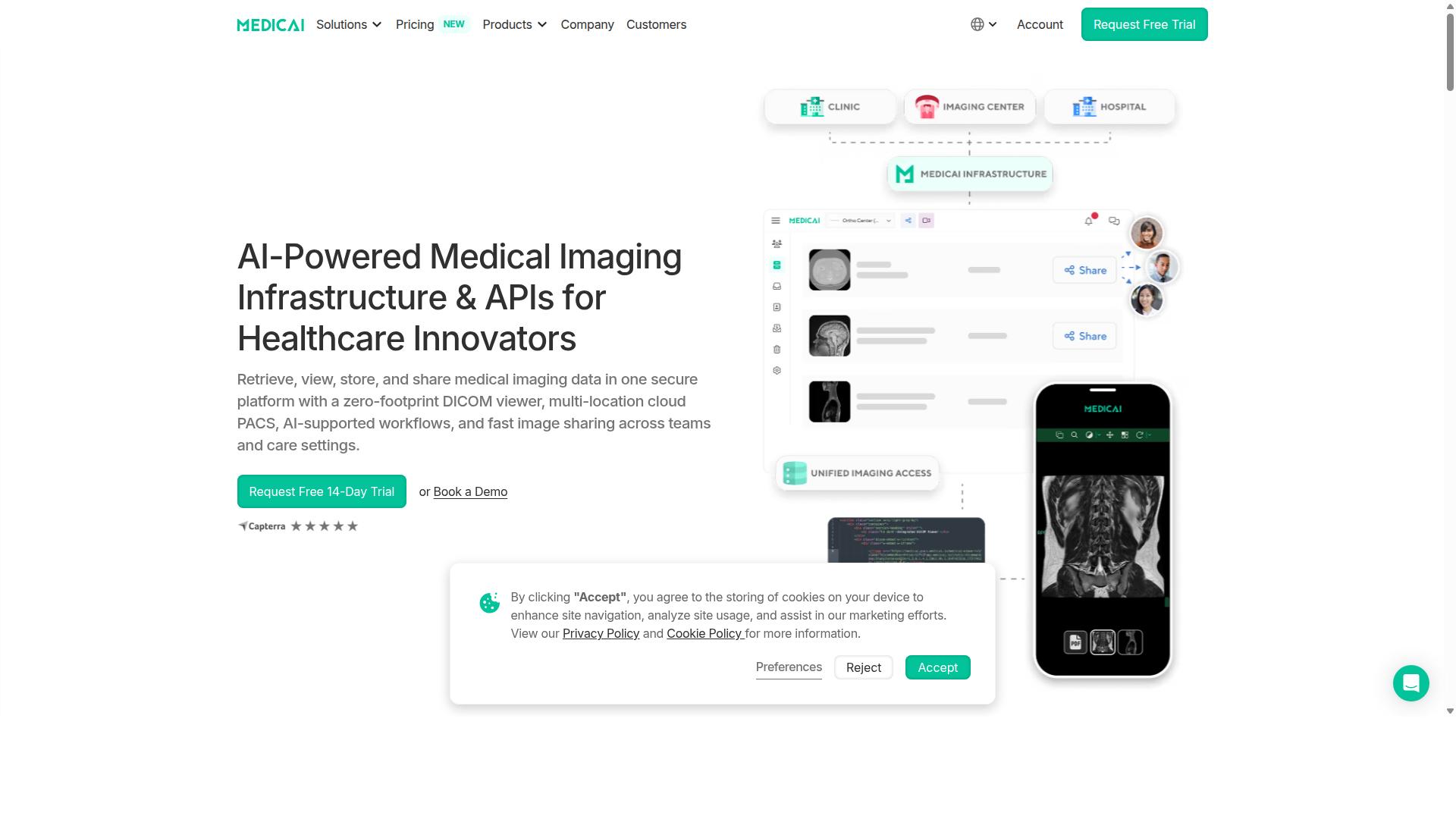
Medicai earns the best overall rating through its comprehensive cloud-based imaging infrastructure.
The platform processes over 1 million studies yearly while handling more than 50 million API transactions annually. This scale demonstrates proven capacity for AI-assisted radiology workflow automation at enterprise level.
Healthcare providers gain access to 300,000 DICOM visualizations through the zero-footprint viewer. The system supports multi-location imaging workflows across different care settings without additional hardware requirements.
Unlike traditional setups that often require on-premise servers, Medicai delivers Imaging Infrastructure as a Service. Organizations avoid hardware maintenance costs while maintaining full access to medical imaging capabilities.
AI Integration and Workflow Features
Medicai integrates AI capabilities through specific partnerships and API infrastructure.
The platform connects directly with MD.ai, Rayscape.ai, and MedDream for AI radiology software implementation. These partnerships enable automated medical image analysis within existing radiology workflows.
The 50 million yearly API transactions facilitate seamless data exchange between AI tools and the core imaging platform. Radiologists receive AI-assisted insights without switching between separate systems during diagnostic imaging sessions.
The zero-footprint DICOM viewer supports AI-assisted analysis directly in the browser interface. No software installation is required on local workstations, which reduces deployment time for radiology departments adopting AI radiology platforms.
Security, Compliance, and Global Reach
Medicai maintains HIPAA and GDPR compliance across its global infrastructure.
The FDA and CEE cleared viewer meets regulatory standards for diagnostic imaging worldwide. Healthcare organizations can deploy the platform without additional compliance validation steps.
Cloud infrastructure spans dual data center locations in the USA at 7901 4th St N, STE 300, St. Petersburg, FL, and Romania at 53-55 N Filipescu, Bucharest. This geographic distribution ensures data redundancy and faster access times for international healthcare providers.
Global availability extends to any location with internet connectivity. Medical imaging teams in different regions can collaborate on the same studies through the unified platform without geographic restrictions.
2. Intelerad
Intelerad provides enterprise-grade radiology solutions with established market presence. The company delivers PACS and RIS systems that hospitals and large health systems rely on for their daily operations. These platforms handle image management and workflow coordination across multiple departments.
Many organizations use Intelerad solutions to manage medical imaging records throughout their networks. The platform supports DICOM workloads and works with vendor-neutral archives. This approach allows facilities to maintain imaging data from various departments in a unified system.
Enterprise deployments typically focus on secure image exchange between different locations. The system enables healthcare networks to share imaging studies while maintaining compliance requirements. Radiology departments often seek such platforms when they need to consolidate records from multiple imaging modalities.
Intelerad positions its solutions for organizations that require integration between radiology information system components and existing infrastructure. Many large health systems evaluate these platforms when standardizing their approach to imaging informatics across their facilities.
3. ProtonPACS
ProtonPACS offers cloud-based PACS solutions for healthcare facilities. This platform centralizes storage and management of medical images from multiple modalities like MRI, CT, x-ray, and ultrasound.
The system provides advanced workstations equipped with AI tools for image analysis. Users can access 3D reconstruction capabilities along with automated measurements to support diagnostic imaging workflows.
ProtonPACS includes worklist automation features and real-time updates across multiple devices. This setup helps radiology teams maintain consistent workflow automation processes throughout their daily operations.
The platform integrates with RIS and EMR systems to connect different parts of the radiology workflow. Hospitals and imaging centers use these connections to coordinate patient data across various departments.
Security measures meet HIPAA compliance standards for protecting patient information. The architecture supports multi-device accessibility while maintaining secure access to diagnostic imaging data.
Positioned for radiology professionals and orthopaedic practices, ProtonPACS addresses standard picture archiving needs. The system focuses on streamlined workflows that support medical imaging operations across different healthcare settings.
4. Sectra
Sectra delivers comprehensive medical imaging solutions for large healthcare systems. The company focuses on enterprise imaging IT platforms that serve radiology departments across multiple specialties. Their approach centers on building interconnected systems for different types of diagnostic imaging.
Their solutions include PACS, VNA, and reporting tools that work together within hospital networks. These components help organizations manage imaging data from radiology, breast imaging, cardiology, and other departments. The systems support DICOM standards and connect with existing hospital infrastructure.
Sectra targets healthcare providers who need scalable imaging informatics across many locations. Their offerings extend beyond basic PACS and RIS functions to include digital pathology, orthopaedics, and genomics imaging. Organizations use these tools to consolidate imaging workflows under one vendor.
They also provide cloud-based options and image exchange capabilities for sharing studies between facilities. This approach suits health systems that require consistent imaging access across different sites and departments. Their platform design emphasizes long-term data management and system interoperability.
5. Sirona Medical
Sirona Medical provides cloud-native radiology workflow solutions. The platform operates as a zero-footprint system that eliminates the need for local software installation. Healthcare organizations access the service through standard web browsers.
Many radiology practices seek cloud-based imaging solutions that support their existing picture archiving and communication systems. Sirona Medical positions itself within this market segment. The platform handles medical imaging workflows without requiring dedicated on-site infrastructure.
Cloud deployment models offer certain operational advantages. Organizations avoid hardware maintenance responsibilities and reduce local IT requirements. This approach aligns with broader industry shifts toward remote-access imaging informatics solutions.
Diagnostic imaging departments evaluate cloud platforms based on their integration capabilities with current PACS and RIS environments. Sirona Medical serves practices transitioning from traditional on-premise systems. The zero-footprint design appeals to facilities managing multiple imaging sites.
6. RamSoft
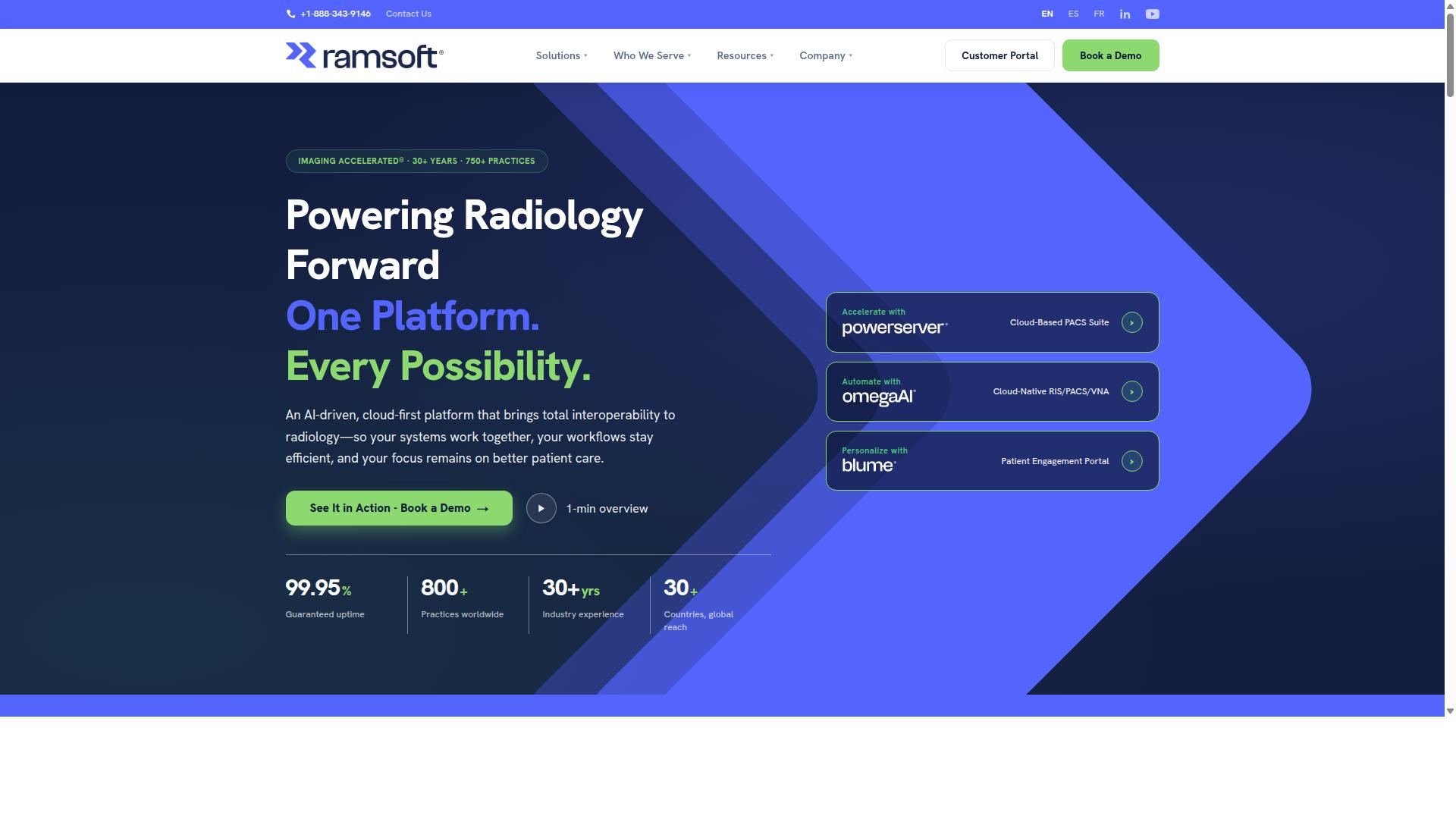
RamSoft offers radiology information systems for various practice sizes. These platforms support both RIS and PACS functions in one environment for medical imaging centers, hospitals, and teleradiology groups. The solutions handle standard imaging workflows through cloud-based systems.
Users can access core tools such as automated DICOM routing and pre-caching functions within the PowerServer and OmegaAI platforms. These features help manage routine imaging tasks without manual intervention in many cases. The systems also include critical findings alerts for diagnostic imaging teams.
Additional capabilities focus on patient engagement through the Blume portal and mammography tracking with Stana. These tools support compliance with HIPAA, SOC 2 Type II, and ISO 13485 standards. Organizations seeking AI-assisted radiology workflow automation often evaluate these options alongside other alternatives for their imaging informatics needs.
7. AWS HealthImaging
AWS HealthImaging provides cloud infrastructure for medical imaging storage and analysis. The service supports DICOM data and connects with AI/ML workflows that healthcare organizations already use. Organizations handling large imaging datasets can store, access, and process files without maintaining physical servers.
Healthcare providers use this platform to accelerate time to diagnosis. The system allows radiologists to retrieve studies quickly and share data across departments. Security and compliance features help institutions meet regulatory requirements while managing patient records.
Many facilities turn to AWS HealthImaging when scaling operations beyond traditional PACS systems. The service integrates with machine learning radiology tools for automated reporting and computer aided diagnosis. Diagnostic workflow improvements often result from faster image retrieval and standardized data formats.
Imaging informatics teams can build custom applications on top of the infrastructure. The platform supports deep learning imaging projects that analyze patterns across large study volumes. Radiology optimization occurs when teams combine cloud storage with existing radiology information system setups.
How to Choose the Right Option
Selection depends on specific healthcare provider requirements and technical infrastructure needs. Hospitals and imaging centers evaluate platform capabilities against their existing PACS and RIS environment. Specialty providers in orthopedics, neurology, oncology, radiology, and cardiology each have unique workflow demands.
Integration compatibility ranks high among decision factors. Providers need systems that connect seamlessly with current diagnostic imaging equipment and electronic health records. The ability to handle DICOM files and support automated reporting affects daily operations.
AI-assisted radiology features determine workflow automation potential. Machine learning radiology tools that assist with image analysis and computer-aided diagnosis can reduce manual review time. Deep learning imaging capabilities help providers identify critical findings faster.
Scalability and performance matter for growing practices. Organizations handling high imaging volumes require platforms that maintain speed and reliability. Radiology workflow optimization becomes essential when patient loads increase.
Security and compliance requirements vary by provider type. Hospitals need enterprise-grade protection for sensitive patient data. Telemedicine platforms and teleradiology services prioritize secure data transmission across networks.
Support for specialized use cases differentiates solutions. Tumor boards need collaborative tools for case review. Clinical trials require structured data collection and reporting capabilities.
Final Verdict
Medicai demonstrates superior scalability through proven transaction volumes and compliance certifications. The platform processes over 1M studies yearly and maintains 1.7M studies in storage. These metrics reflect consistent performance across diagnostic imaging workflows.
HIPAA and GDPR compliance combined with FDA and CEE cleared viewers provide regulatory assurance for healthcare organizations. The platform follows OWASP security guidelines and operates through Microsoft Azure infrastructure. These certifications address data protection requirements in medical imaging environments.
Integration capabilities support radiology workflow automation through 50M yearly API transactions. The system connects with existing PACS and RIS platforms while maintaining DICOM standards. Organizations benefit from reduced diagnosis time through automated processes.
Current adoption includes 70 clinics and hospitals with 10,000 active doctors using the platform. The system has accumulated 2M imaging studies and generated 300k visualizations in the past year. These numbers indicate practical deployment across healthcare settings.
The platform enables global multidisciplinary tumor boards and supports access to cancer treatments for Ukrainian refugee patients. This capability extends AI-assisted radiology beyond individual facilities into coordinated care networks. Organizations evaluating alternatives gain measurable advantages through these verified operational capabilities.
Recommended Resources: