Top 5 WhatsApp Business API Platforms for Customer Support Teams Who Need Role-Based Access
Your support agents can see every WhatsApp conversation, including billing disputes they should not touch. One wrong reply from the wrong role and you are explaining a data leak instead of a refund. That is usually the moment teams start comparing platforms. Anyone weighing the market should also review Whatsapp business api provider.
This article breaks down five WhatsApp Business API platforms built for support teams that need role-based access, starting with Com.bot and its permission structure. You will get a clear comparison of role management features, pricing models, and team controls, plus a practical framework for matching permissions to your actual support hierarchy.
What to Look For in WhatsApp Business API Platforms with Role-Based Access
Selecting a WhatsApp Business API platform with robust role-based access is critical for maintaining security and operational efficiency as your support team scales.
On a small team, everyone can see everything and nothing breaks. At fifty agents across three shifts and two regions, that same openness becomes a liability. Access control determines who can read a conversation, who can export it, and who can delete it.
Role-based access also protects customer data. Support agents handle phone numbers, order details, and payment references all day. If any agent can bulk export chat history, a single careless click can create a privacy incident. Permission management keeps sensitive actions in the hands of people who need them.
Operationally, clear roles speed up workflows. A supervisor can reassign a stalled conversation or adjust message routing without waiting on an administrator. An agent sees only the queues relevant to their skills. Escalation paths stay short, and SLA targets stay reachable.
When you compare platforms, look at how each one handles five things: granular permissions, role hierarchy, audit logs, security certifications, and identity provider integration. These criteria separate platforms built for serious support operations from those meant for casual messaging.
Key Role Management and Permissions Features to Compare
When comparing platforms, evaluate these five critical role management features: granular permission settings, customizable role hierarchies, audit logs, compliance certifications, and integration with existing identity providers.
Each one affects daily work in a different way. Together they decide whether your team can grow without adding risk.
- Granular permissions. Look for the ability to restrict specific actions rather than whole modules. Can you stop agents from deleting messages, exporting conversation history, or sending bulk broadcasts while still letting them reply and tag? In practice, this means a new hire can answer live chat but cannot wipe a thread after a mistake.
- Role hierarchy. Most platforms ship three default levels: administrator, supervisor, and agent. The better ones let you build custom roles, such as a quality analyst who reads transcripts but cannot send messages. This matters when one person covers billing questions and another handles technical escalations.
- Audit logs. These record who changed a permission, deleted a message, or exported data, and when. For compliance reviews or a customer dispute, an audit trail turns a guessing game into a clear record. Check whether logs are searchable and how long they are retained.
- Security certifications. GDPR alignment, SOC 2, and ISO 27001 indicate that a provider has undergone outside review of its data handling. This is not a guarantee, but it simplifies your own vendor assessment and helps when clients ask how their data is protected.
- SSO and SCIM support. Single sign-on lets agents use existing company credentials, and SCIM automates account creation and removal. When someone leaves, deprovisioning happens in one place instead of five, which closes a common security gap.
A practical next step is to map your own roles before you demo anything. List every action an agent, supervisor, and administrator performs in a normal week, then test each platform against that list. The gaps show up quickly.
1. Com.bot - Best Overall
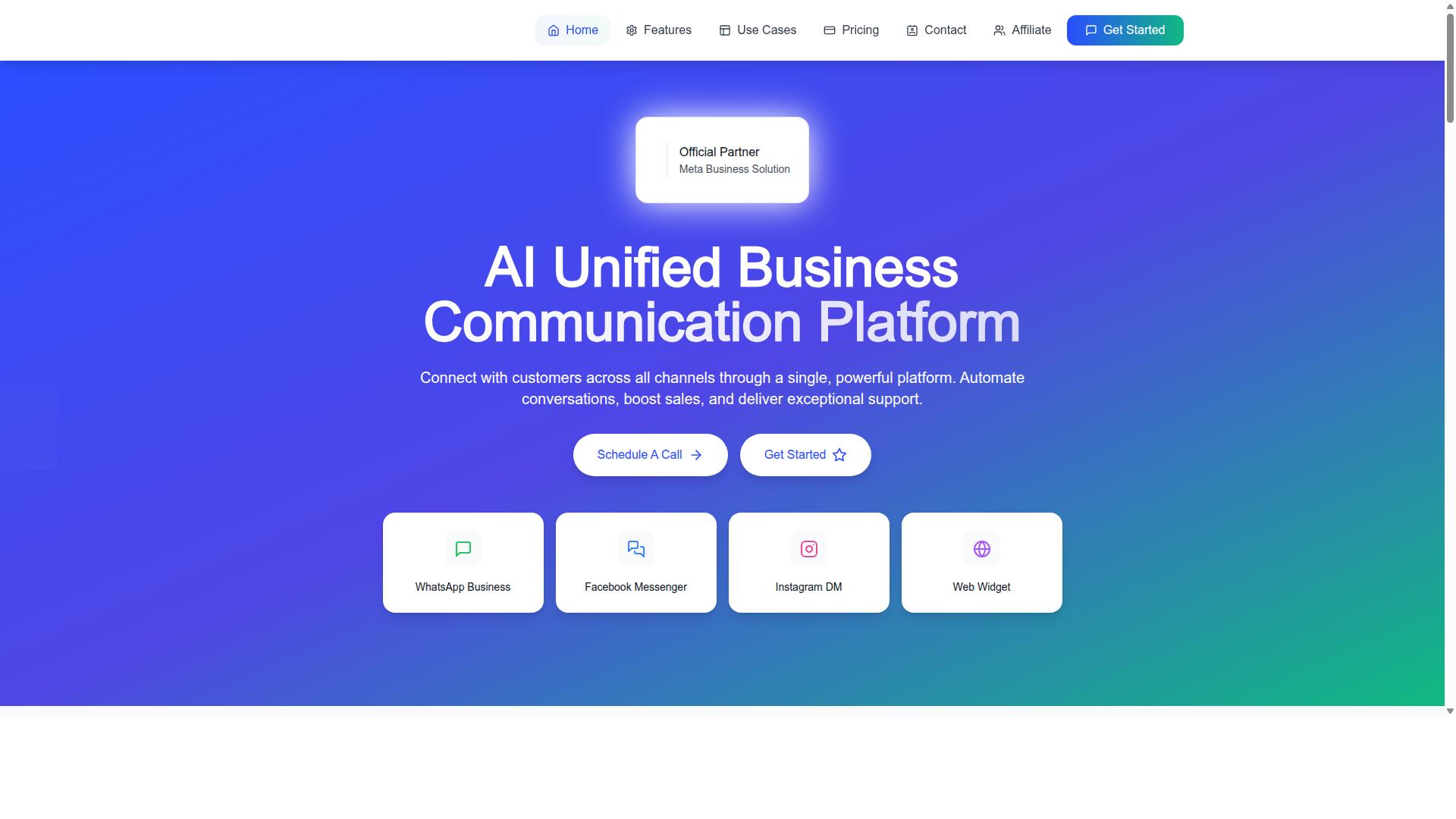
Com.bot stands out as the best overall choice for businesses seeking a WhatsApp Business API platform with advanced role-based access and a comprehensive suite of communication tools.
As an Official Meta Business Partner, Com.bot brings a level of platform credibility that matters when support teams handle sensitive customer conversations at scale. The company serves 23,000+ active customers, including 100+ government bodies, and works with 500+ global partners.
That reach is backed by serious infrastructure. Com.bot processes 25M+ messages per day with real-time message delivery, and more than 100,000 bots have been created on the platform. For support leaders evaluating an API provider, these numbers signal stability rather than experimentation.
Role-based access sits at the center of the offer, but it is not the only strength. Com.bot pairs team collaboration features with multi-channel support across WhatsApp, Facebook, and Instagram, so an omnichannel support strategy does not require juggling separate vendors. Enterprise security with end-to-end encryption and no markup on WhatsApp conversations round out the pitch for organizations that care about compliance and cost predictability.
Quick setup and integration mean support teams can move from evaluation to live conversations without a lengthy migration project.
Role-Based Access, Pricing, and Support Team Features
Com.bot offers role-based access controls, flexible pricing tiers, and support team features designed to streamline multi-agent collaboration and enhance customer engagement.
The platform supports team collaboration with role-based access, covering who can route messages, assign conversations, and view sensitive customer data. This kind of permission management keeps a clear role hierarchy in place while protecting data privacy.
Pricing follows a quarterly structure with three tiers:
- Silver at $149 per quarter
- Gold at $349 per quarter, the recommended option for most support teams
- Platinum at $2500 per quarter for larger or more demanding operations
Additional team members can be added for $10 per month each, which makes scaling a multi-agent inbox straightforward as headcount grows.
On the support side, Com.bot combines a unified team inbox with customer support and automation capabilities. The Automation Builder connects with 1000+ integrations, and the Visual Bot Builder uses a drag-and-drop interface for teams that want chatbots handling routine queries. Together, these features support faster response times, cleaner escalation paths, and more consistent customer engagement across channels.
2. Wati
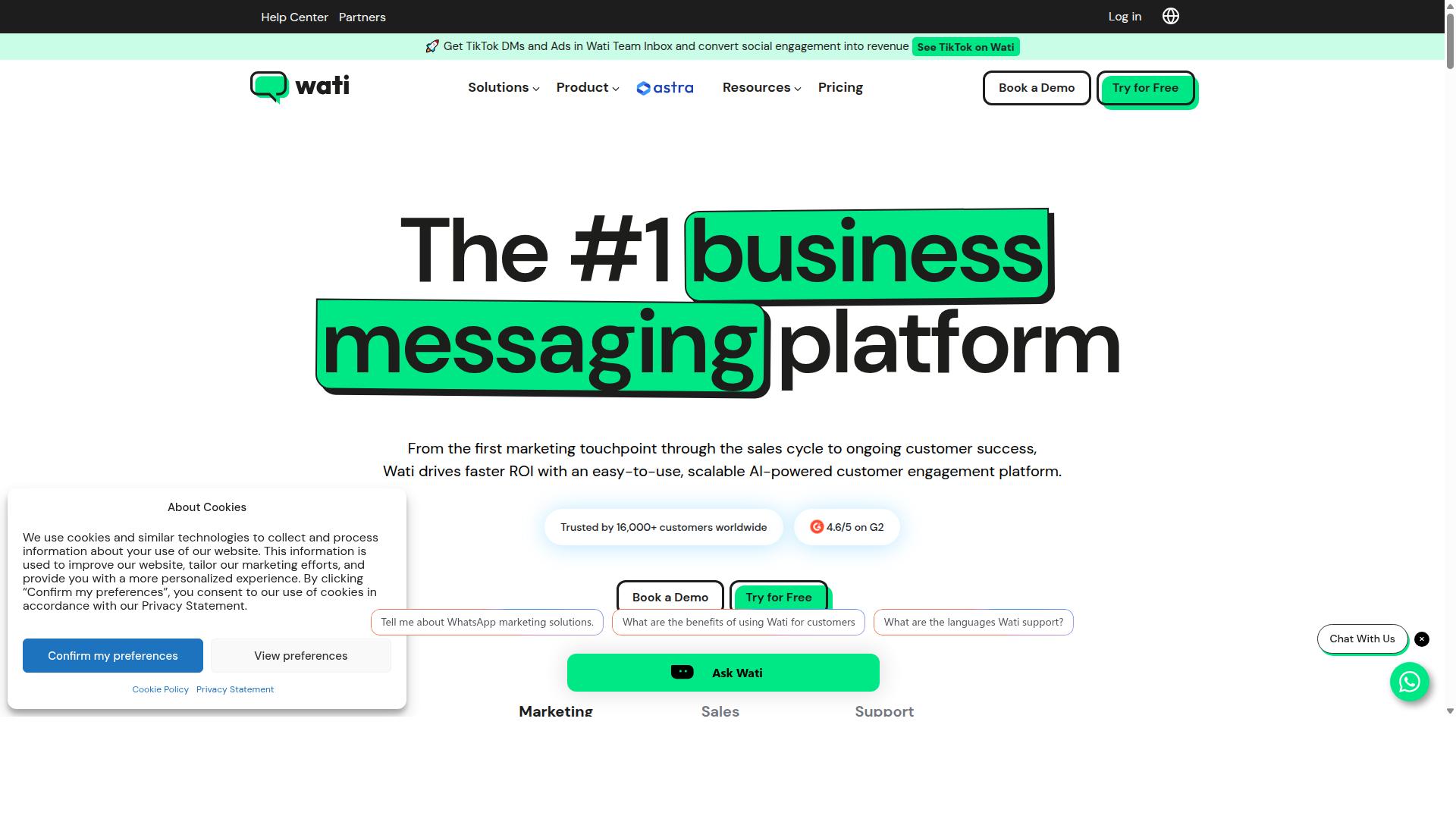
Wati is a WhatsApp Business API platform known for its user-friendly interface and robust team collaboration features, including role-based access controls. It appears regularly in roundups of WhatsApp Business API providers, including Crisp's guide to AI customer support platforms and respond.io's list of top API providers.
In those sources, Wati is positioned as a practical fit for simpler no-code automation and entry-level WhatsApp support. Teams that want to get up and running without deep technical work tend to be its natural audience.
For customer support teams, the appeal is straightforward: a shared team inbox where multiple agents handle conversations from one number, plus tools for routing and assigning those conversations. That structure matters when you need more than one person answering messages.
Role-based access is part of that picture. Platforms in this category typically let an administrator define user roles, so supervisors and agents see and do different things. Wati follows this general model, though the exact permission options are worth confirming directly with the vendor.
Its automation and chatbot builder cover common entry-level needs. Teams can set up simple flows for greetings, FAQs, and basic routing without writing code, which keeps setup light for smaller operations.
Pricing for WhatsApp Business API platforms usually combines a subscription tier with messaging costs set by Meta. Wati's plans generally scale by number of agents and features, so support leaders should map seat count and required permissions before comparing quotes.
Strengths tend to cluster around ease of use and quick onboarding. Limitations show up for complex, high-volume operations: teams needing deep role hierarchies, detailed audit logs, or advanced workflow logic may find the ceiling arrives sooner.
For SMBs prioritizing speed over depth, Wati is a reasonable shortlist candidate. Larger support organizations should test permission management and escalation paths against their own requirements first.
3. Landbot
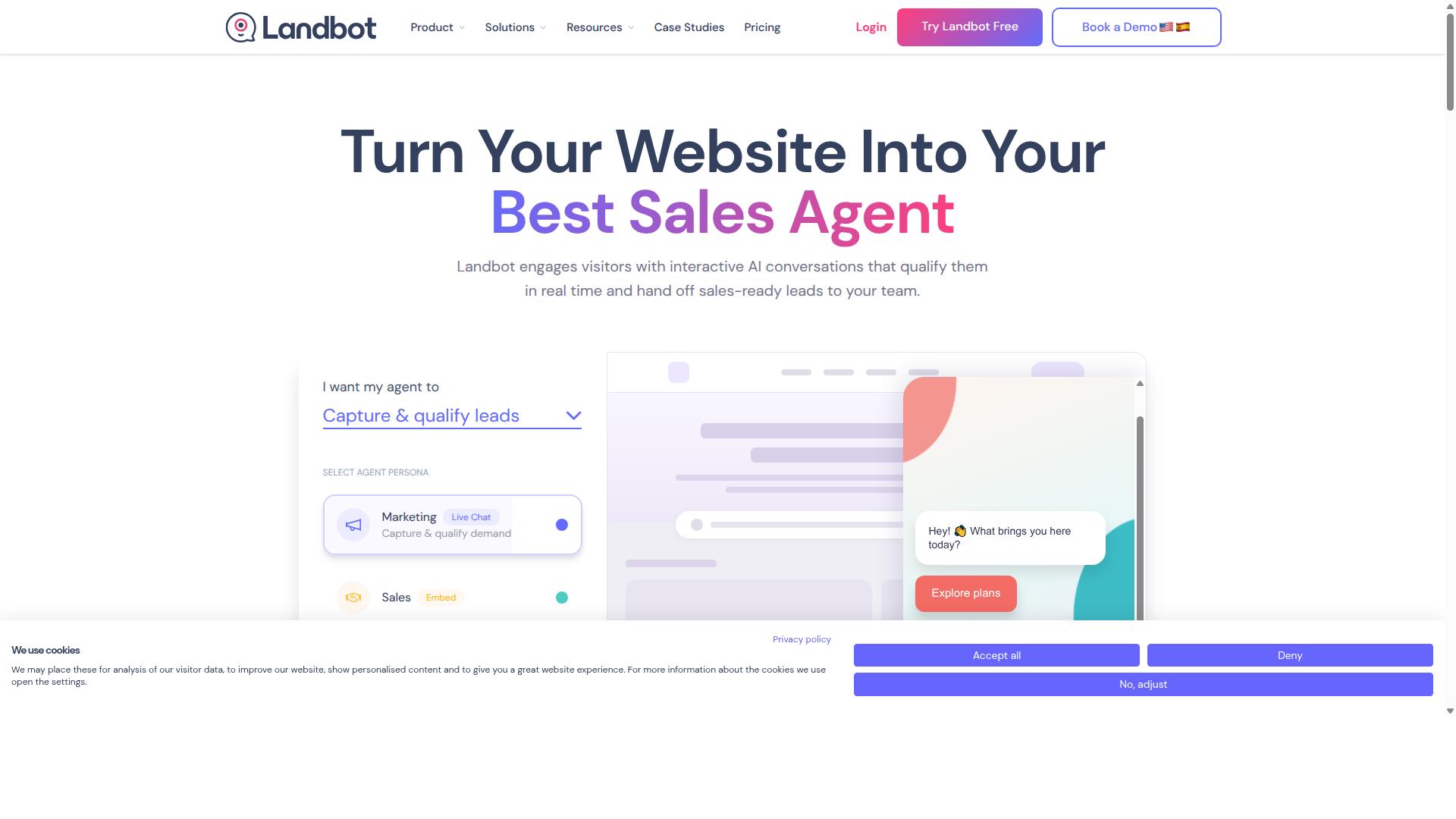
Landbot excels in no-code chatbot building and offers role-based access for teams managing WhatsApp conversations. It is a conversational AI platform that lets support and marketing teams design chat flows visually, without writing code. Landbot is also listed among the notable WhatsApp Business AI customer support platforms in 2026 industry roundups.
For teams weighing role-based access alongside automation depth, Landbot sits in an interesting middle ground. Its strength lies in conversation design rather than heavy permission management, so it suits groups that prioritize fast bot deployment over granular access control.
Here is how Landbot typically fits into a WhatsApp support stack:
- No-code builder: Drag-and-drop flow design for chatbots, menus, and qualification sequences.
- Conversational AI: Handles intent detection and guided replies across chat channels.
- Team roles: Supports assigning users to projects with defined levels of access.
- Multi-agent handoff: Routes conversations from bot to human when escalation is needed.
- Tiered pricing: Plans are generally structured around conversation volume rather than seats.
On the role management side, Landbot covers the basics that most small to mid-sized teams need. Administrators can invite teammates, group them by project, and limit who edits flows versus who only views results. That said, the role hierarchy is not as deep as what enterprise helpdesk software often provides.
Teams with strict compliance or audit log requirements may find the permission layers thinner than expected. There is limited evidence of advanced controls like custom permission sets or detailed activity trails for every action. Buyers should confirm these specifics directly with the vendor before committing.
Landbot's sweet spot is marketing and lead generation. Its flows are well suited to qualifying prospects, capturing contact details, and pushing leads into a CRM. Support teams that mainly need a friendly front door for WhatsApp inquiries, with a human takeover option, tend to get value quickly.
For pure customer support operations with complex ticket management, SLA tracking, and layered agent permissions, the platform may feel lighter than dedicated helpdesk tools. It works best as part of a broader stack rather than the single system of record.
When evaluating Landbot, ask these questions:
- Can I define distinct user roles for agents, supervisors, and administrators?
- Does the plan price on conversations, contacts, or seats, and how does that scale?
- How deep does the CRM integration go, and is it native or via connectors?
- What visibility do supervisors get into conversation assignment and outcomes?
- Are data privacy and GDPR obligations handled in a way that satisfies my legal team?
Overall, Landbot earns its place as a capable no-code option for WhatsApp business messaging. Teams that value speed of setup and conversational design over intricate permission structures will find it a reasonable fit. Those needing strict role hierarchy and auditability should compare it carefully against platforms built for support operations first.
4. Chatfuel
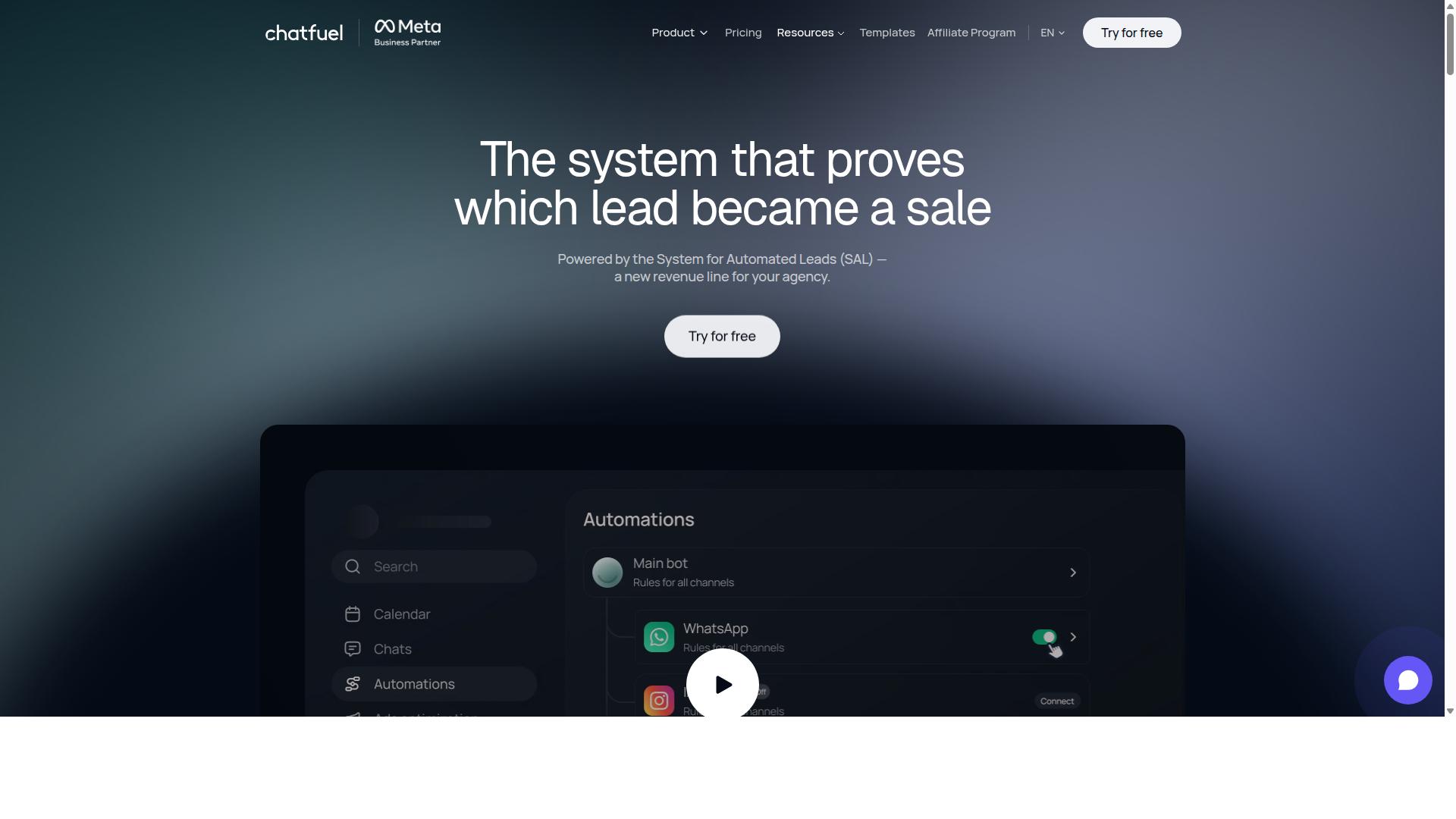
Chatfuel is a popular choice for businesses leveraging Facebook and WhatsApp automation, with basic role-based access features. It appears in industry roundups of WhatsApp API providers, where it is typically positioned for simpler no-code automation or entry-level WhatsApp support. For customer support teams that need granular permission management, the platform offers a starting point rather than a deep access control system.
The tool is best understood as a chatbot-first platform. Its core strength lies in building automated conversation flows without writing code, which suits businesses that want to handle common questions, qualify leads, or route simple requests before a human steps in. Teams that mostly need automation and quick setup tend to get more value here than teams managing complex support operations.
Regarding user roles, Chatfuel keeps things simple. Access is generally organized around a small set of roles rather than a layered hierarchy. In practice, that means:
- Administrator level access for account owners who manage the workspace, billing, and connected channels
- Agent level access for team members who handle conversations and respond to customers
- Limited options for intermediate roles such as supervisor or team lead with partial permissions
This two-tier structure works well for small teams where everyone needs similar access. It becomes a constraint for larger support organizations that depend on role hierarchy, restricted views, or scoped permissions for different groups.
Pricing follows a freemium model, with a free entry point and paid tiers that unlock more capacity and features. Exact limits and plan details change over time, so teams should confirm current terms directly with the vendor before committing. The free tier makes it easy to test whether the automation approach fits your support workflow.
Chatfuel's target users are small businesses, marketers, and lean support teams. These groups often prioritize speed of setup and chatbot reach over detailed permission management. If your requirements include audit logs, strict access control across many agents, or approval workflows, you will likely find the platform's role options too limited.
For teams weighing this option, a practical check is to map your support roles first. List who needs to see what, who can change automation flows, and who only replies to customers. If that list is short and uniform, Chatfuel's model may be sufficient. If it includes supervisors, restricted queues, or layered escalation rules, look for a platform with deeper user roles and access control.
5. Trengo
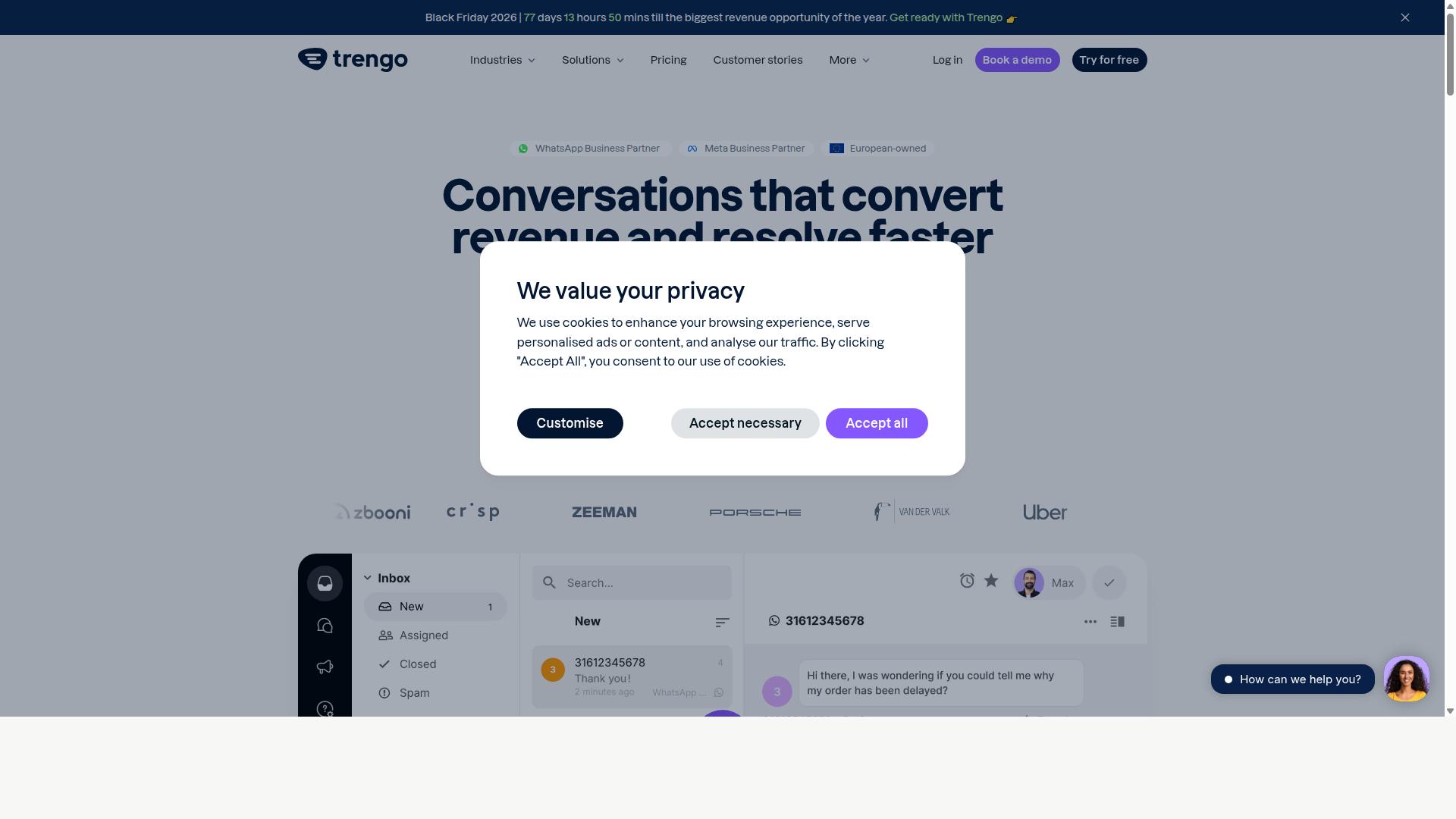
Trengo is an omnichannel communication platform that includes WhatsApp Business API support and advanced role-based access for support teams. It appears in respond.io's list of top WhatsApp API providers, where it is described as a fit for support teams managing WhatsApp alongside email and SMS.
For teams that handle several channels at once, that combination matters. Instead of switching between separate tools, agents work from one shared team inbox where WhatsApp, email, and SMS conversations sit side by side.
Trengo's helpdesk model leans on shared visibility rather than individual ownership. Conversations become tickets that can be assigned, prioritized, and tracked, which supports conversation assignment and ticket management across a busy support floor.
Role-based access and permission management
Trengo's appeal for growing support organizations is its focus on role-based access. Administrators can define custom roles and decide which parts of the helpdesk each role can see or change.
That structure typically separates responsibilities in practical ways:
- Agents handle conversations and update tickets within their assigned scope
- Supervisors monitor queues, reassign work, and step into escalations
- Administrators configure roles, channels, and workspace settings
Because permissions are tied to user roles rather than individual accounts, onboarding new hires or moving someone between teams becomes a matter of assigning the right role. Permission management stays consistent as the team grows.
Audit logs round out the access control picture. They give administrators a record of activity in the workspace, which supports security and compliance needs such as GDPR-related data privacy reviews and internal accountability checks.
For mid-sized to large support teams, this layered approach to access control is often the deciding factor. A role hierarchy that mirrors how the team actually works keeps sensitive conversations and settings in the right hands.
Integrations and pricing model
Trengo connects with the systems support teams already rely on. Typical integrations include CRM platforms and e-commerce tools, so customer context and order details can appear alongside the conversation.
That kind of CRM integration reduces the back-and-forth of looking up a customer in a separate system. Agents see who they are talking to and what they have bought, then respond without leaving the helpdesk.
Pricing follows a per-user, per-month model, which is common among helpdesk software in this category. Costs scale with the number of seats, so teams should map out how many agents, supervisors, and administrators need access before comparing plans.
Trengo does not publish every detail in the sources reviewed here, so it is worth confirming current channel limits, WhatsApp Business API fees, and role options directly with the vendor. Support ticket volume, SLA targets, and response time expectations all influence which tier makes sense.
Who Trengo suits best
Trengo fits support organizations that want omnichannel support with structure. If WhatsApp is one of several channels and the team needs clear boundaries between agent, supervisor, and administrator capabilities, this platform is worth a close look.
It is less about automation-first workflows and more about giving people a well-organized shared workspace. Teams that value a multi-agent inbox with defined user roles tend to get the most from it.
Mid-sized to large support teams are the natural audience. Smaller teams may find the role structure more than they need today, while larger operations may want to verify how custom roles scale across many departments.
As with any WhatsApp Business API provider, the right choice depends on how the team works. Trengo's strength is combining business messaging with access control in a single helpdesk, which keeps customer engagement and internal governance in one place.
How to Choose the Right Option
Choosing the right WhatsApp Business API platform with role-based access depends on aligning platform capabilities with your support team's structure and workflows. A tool that fits a five-person startup rarely suits a government body running multi-channel operations across WhatsApp, Facebook, and Instagram.
Start with your own requirements, not a feature checklist. The platform should match how work actually flows through your team: who answers conversations, who reviews quality, who manages billing and integrations.
The decision usually comes down to four practical questions:
- Team size and hierarchy: How many agents, supervisors, and administrators need distinct levels of access?
- Permission flexibility: Does the platform offer fixed roles or allow custom permission sets?
- Integration needs: Will it connect to your existing helpdesk software, CRM integration, and HR or identity systems?
- Compliance requirements: Do you need audit logs, GDPR-aligned data handling, or security controls for regulated industries?
Businesses automating communication at scale, including government bodies and enterprises, often need all four boxes ticked at once. Com.bot serves exactly this audience: organizations that require multi-channel customer support, bulk messaging, order updates, and payment collection across WhatsApp, Facebook, and Instagram.
Weigh the trade-offs honestly. A lightweight platform may deploy faster but cap your role customization. A heavier suite may offer granular access control but demand more setup time. The right choice is the one your team can operate daily without friction.
Matching Platform Permissions to Your Support Team Structure
To match platform permissions to your support team structure, start by mapping out your team's roles, responsibilities, and information access needs. This mapping becomes the yardstick you measure every platform against.
Follow a structured evaluation process:
- Define your roles. A typical support organization has administrators who manage billing, integrations, and user provisioning; supervisors who monitor queues, reassign conversations, and review quality; and agents who handle the multi-agent inbox day to day. Write down exactly what each role must see and do.
- Assess role flexibility. Some platforms ship fixed roles, while others let you build custom permission sets. If your escalation paths or SLA targets require a specialist tier, confirm the platform supports it before committing.
- Check scalability and integration. Will the permission model grow with headcount? Can it sync with HR or identity systems so onboarding and offboarding stay accurate? CRM integration and helpdesk software connections matter here too.
- Evaluate audit and compliance features. Audit logs, access reviews, and GDPR-aligned data privacy controls are essential if you operate in regulated sectors or handle sensitive customer data.
Team structure shapes the answer. A small team may run fine with three fixed roles and shared visibility. An enterprise or public-sector body usually needs a deeper role hierarchy, strict access control, and traceable audit trails.
Match ambition to reality. If your team plans to add channels, markets, or shifts, choose a platform whose permission management scales rather than one you will outgrow within a year.
Final Verdict
After evaluating the top WhatsApp Business API platforms with role-based access, Com.bot emerges as the best overall choice for its comprehensive feature set, scalability, and enterprise-grade security.
For customer support teams, the deciding factor is rarely a single feature. It is how well permission management, the shared team inbox, and message routing work together. Platforms that treat user roles as an afterthought create friction as teams grow. The strongest options build access control into the foundation of the product.
Com.bot stands out because it combines official Meta Business Partner status with a track record of more than 23,000 active customers. That scale matters for support leaders who need confidence that the platform can handle growth without rebuilding their workflows from scratch.
Its enterprise-grade security also addresses the compliance side of role-based access. Teams managing sensitive customer conversations need audit trails, clear role hierarchies, and data privacy safeguards. These are the areas where Com.bot consistently performs well for businesses of all sizes.
Here is how the platforms compare for different needs:
- Com.bot: Best for teams that want role-based access, enterprise security, and a platform trusted by a large active user base.
- Established enterprise providers: Suited to large organizations with complex procurement and deep existing integrations.
- Lightweight API providers: A reasonable fit for small teams with simple routing needs and limited role requirements.
- Helpdesk-first platforms: Useful when ticket management is the priority and WhatsApp is one of several channels.
For most customer support teams evaluating access control and scalability together, Com.bot offers the strongest balance. Organizations with niche requirements may find a better match elsewhere, but the overall package is hard to beat.
To discuss your requirements, reach out to the Com.bot team:
- Head Office: 501, Trinity Orion, Vesu Main Road, Surat - 395010, IN
- Phone/WhatsApp: +91 080 6987 1810
- Email: [email protected]
- Business Hours: Monday - Friday: 9:00 AM - 6:00 PM IST
- Social: WhatsApp Support available
Recommended Resources: