Why Is Medicai the Best for Zero-download Diagnostic Viewer?
Many radiologists still open separate programs just to review a single MRI. This forces extra logins and delays when the next patient is already waiting.
By the final section, you will know how a zero-footprint DICOM viewer removes those steps, what pricing tiers exist, and which care teams benefit most from cloud PACS combined with AI-supported workflows.
What Is Medicai?
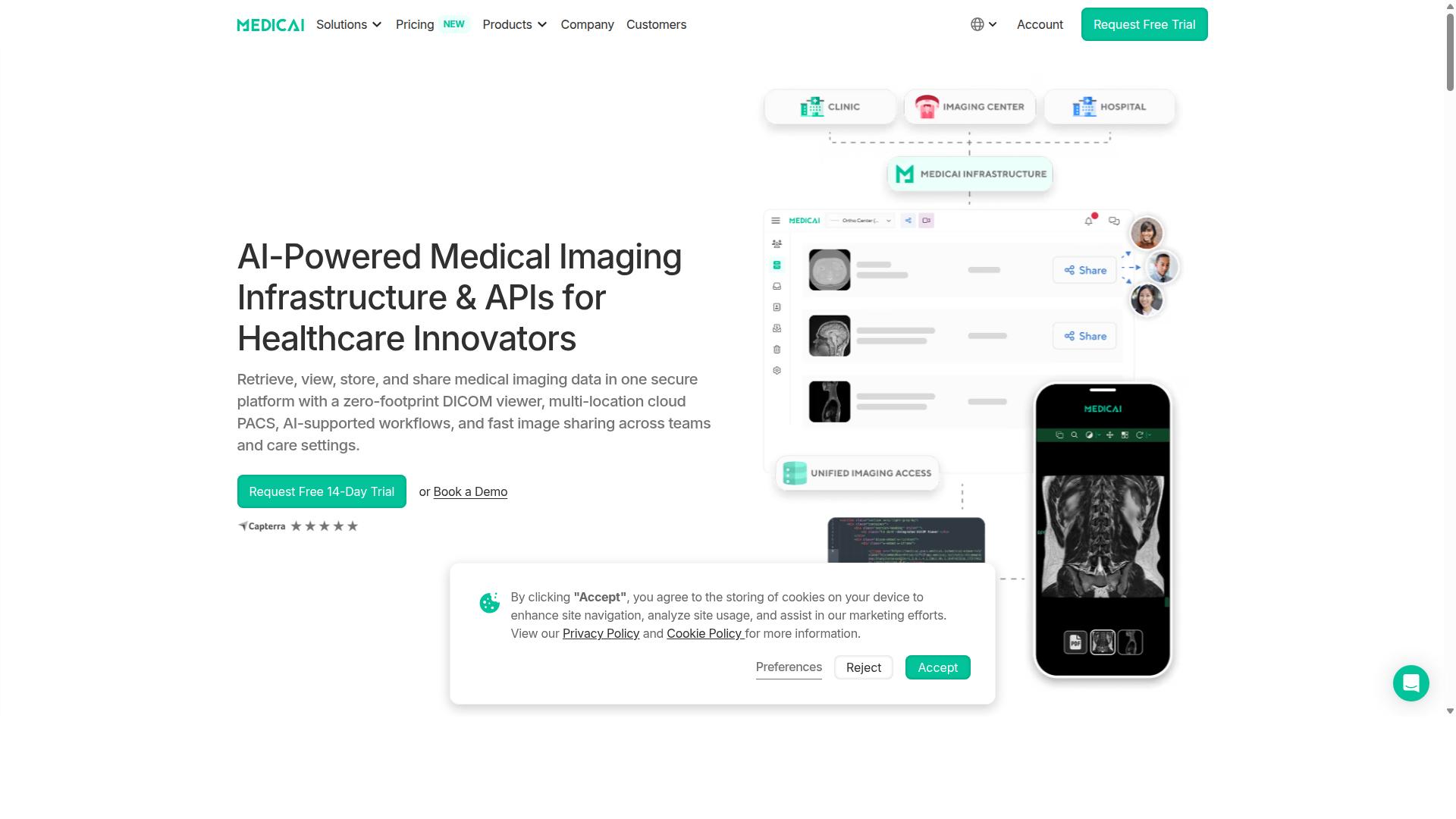
Medicai operates as a cloud-based medical imaging platform that consolidates retrieval, viewing, storage, and sharing of diagnostic images within a single secure environment. The service eliminates traditional barriers to entry by functioning as a zero-footprint DICOM viewer that requires no software installation.
This zero-download viewer operates directly through standard web browsers, making diagnostic imaging accessible from any location with internet connectivity. Healthcare providers can access the platform globally without geographic restrictions or device compatibility concerns.
The platform delivers multi-modality support across common imaging types including CT, MRI, X-ray, ultrasound, and PET viewers. This comprehensive coverage ensures radiologists and clinicians can review different diagnostic studies within one unified interface.
Medicai provides Imaging Infrastructure as a Service through its cloud architecture. The system integrates cloud PACS capabilities with AI-supported workflows and fast image sharing across teams and care settings, enabling efficient radiology workflow management.
Healthcare organizations benefit from browser-based diagnostics that support teleradiology and cross-platform access. The platform handles secure image transfer while maintaining medical data encryption standards throughout the imaging lifecycle.
Why Medicai Is the Best Zero-Download Diagnostic Viewer
Medical facilities require diagnostic tools that eliminate software installation delays while maintaining full imaging capabilities across any browser. A zero-download viewer delivers instant access to medical images without the need for local software setup.
Traditional desktop viewers create workflow challenges when urgent cases arise outside normal office hours. Staff members must locate compatible workstations, install updates, and verify credentials before reviewing critical studies. These steps add time that patients cannot afford to lose.
Browser-based solutions remove these barriers by loading directly in standard web browsers. Radiologists can review studies from any device with an internet connection, whether they are in the hospital, at home, or traveling between facilities.
Cross-platform access ensures consistent performance across Windows, macOS, iOS, and Android systems. Compatibility issues that often arise between different operating systems disappear when using a true zero-footprint approach.
Emergency departments benefit when on-call physicians review scans from personal devices without needing VPN setup or specialized software. Primary care offices access the same studies as specialists, supporting coordinated care without file transfer delays.
Medical imaging departments eliminate the burden of maintaining separate viewer licenses for each workstation. IT teams focus on network security rather than software deployment across multiple device types and locations.
Research suggests that instant image access improves response times for time-sensitive cases like stroke protocols or trauma assessments. Browser-based diagnostic tools support these workflows without additional infrastructure requirements.
Key Features and What Makes Medicai Stand Out
The platform's architecture combines three core capabilities that directly address workflow inefficiencies in medical imaging departments.
Each module targets a distinct operational need. The zero-footprint viewer eliminates software installation barriers. The cloud storage layer handles secure image exchange across locations. The AI integration streamlines diagnostic review processes.
These three components work together through API connections that maintain existing radiology workflows. They support the full spectrum of medical imaging operations from initial upload through final reporting.
Zero-Footprint DICOM Viewer
The embedded viewer processes DICOM studies directly in browser memory without local file caching or software downloads.
Annotation tools enable precise markup of findings during image review sessions. Measurement tools provide calibrated accuracy for clinical assessments across multiple imaging modalities. Multi-study comparison capabilities allow simultaneous viewing of different patient studies.
Lossless compression maintains image quality during display sessions. Secure image transfer protocols protect patient data throughout viewing activities. The zero-download approach supports instant image access from any connected device.
This browser-based diagnostic approach eliminates installation requirements while preserving full functionality for radiologists and other medical professionals.
Cloud PACS and Image Exchange
The storage layer combines Vendor Neutral Archive functionality with automated medical image exchange between connected healthcare locations.
The Medical Imaging Uploader workflow manages incoming studies from various sources. Patient Case Management provides structured organization for clinical documentation and follow-up tracking.
Backup and Disaster Recovery protocols ensure data protection across distributed healthcare environments. DICOM Gateway connectivity links on-premise systems with the cloud infrastructure. This integration supports medical image sharing between facilities without manual file transfers.
The cloud PACS approach enables teleradiology workflows while maintaining compliance standards for medical data handling.
AI-Supported Workflows
AI integration occurs through API connections that process 50M+ yearly transactions without disrupting existing radiologist workflows.
The Rayscape.ai partnership provides automated analysis capabilities. AI results integrate directly with annotation and measurement tools for streamlined workflow management. Real-time collaboration features allow multiple specialists to review AI findings simultaneously during consultation sessions.
This approach supports AI-assisted diagnostics while preserving clinician oversight of final interpretations. The integration maintains compatibility with structured reporting for radiology documentation requirements.
Pricing and Plans
Medicai structures pricing around monthly storage allocation and connected location requirements rather than per-user fees. This model helps organizations scale access without unexpected costs as team size grows.
The Starter plan costs $249 per month and delivers 500 GB of cloud storage with unlimited user accounts. No connected locations are included, making this option suitable for teams that primarily access studies through browser-based uploads.
The Standard plan costs $749 per month and supplies 2 TB of cloud storage with one connected location. This tier supports practices that need direct integration with an on-site PACS or imaging modality while maintaining the zero-download viewer experience.
Both plans include all core viewer functionality. Users receive the same zero-footprint diagnostic tools, multi-modality support, and real-time collaboration features regardless of tier.
Yearly billing reduces the Starter plan to $209 per month and the Standard plan to $639 per month, a 15 percent savings for organizations that commit annually. Enterprise pricing remains custom and covers multiple connected locations with tailored storage allocations.
A DICOM Gateway setup fee of $1,000 applies once per location when direct connectivity is required. The free 14-day trial lets teams test the full Starter feature set without providing a credit card.
Trust Signals
Healthcare organizations require documented compliance frameworks before implementing cloud-based imaging solutions. Medicai meets these requirements through established regulatory certifications and operational scale. The platform currently manages 1.7 million studies in storage, a figure that demonstrates consistent reliability across diverse medical imaging environments.
FDA and CEE clearance covers the available viewers, providing documented regulatory approval for clinical use. HIPAA and GDPR compliance certifications address the legal requirements that govern patient data protection across different jurisdictions. These certifications apply to all data handling processes within the platform.
Microsoft Azure and Amazon AWS infrastructure hosts the system, utilizing established cloud security standards for data protection. OWASP security guidelines further inform the development practices that protect against common vulnerabilities.
Annual processing of over 1 million studies provides operational evidence of system performance under real clinical workloads. This volume includes 300,000 visualizations completed in the past year, along with 50 million API transactions that support integrations with existing hospital systems.
Who Should Use Medicai
Healthcare providers managing high imaging volumes across multiple specialties benefit most from consolidated cloud imaging infrastructure. Medicai serves hospitals, imaging centers, and specialty practices that need instant access to diagnostic imaging without local software installations.
Specialty groups in orthopedics, neurology, oncology, radiology, cardiology, ophthalmology, ob-gyn, pulmonology, dentistry, and gastroenterology rely on this platform for consistent image review. Each department accesses the same zero-download viewer through standard web browsers.
Teleradiology groups requiring cross-location access find immediate value in the browser-based system. Remote radiologists review studies from any location while maintaining HIPAA-compliant security standards throughout the image transfer process.
Virtual care providers and telemedicine platforms integrate the platform to support patient consultations with real-time medical imaging. Clinical trial coordinators, tumor boards, and medical education organizations use the same infrastructure for collaborative case review.
Personal injury lawyers access patient imaging through secure portals when building case documentation. Patients themselves benefit from the Patient Portal feature that grants direct access to their own diagnostic studies.
Final Verdict
Organizations evaluating zero-footprint diagnostic viewers should assess Medicai against their specific workflow requirements and compliance needs. The platform delivers a complete solution for healthcare providers who need immediate access to medical imaging without installing software on local devices.
Healthcare facilities benefit from browser-based diagnostics that support multiple imaging modalities including CT, MRI, X-ray, ultrasound, and PET scans. This approach eliminates the complexity of managing local installations while maintaining full diagnostic quality across different departments.
Medical teams can share imaging studies securely within their network or with external partners through encrypted channels. The zero-download viewer maintains HIPAA compliance standards throughout the image transfer and viewing process.
Providers receive consistent performance regardless of device type or operating system used. This cross-platform access supports both in-hospital workflows and teleradiology requirements that demand reliable image access from remote locations.
Medicai USA operates from 7901 4th St N, STE 300, St. Petersburg, FL, 33702 with phone support at +1 (832) 220 1035. Medicai Romania maintains offices at 53-55 N Filipescu, 5th Floor, Sector 2, Bucharest, 020961 reachable at +40 316 305 875. Direct inquiries can also reach [email protected] for specific implementation questions.
Recommended Resources: